Toddler hitting behaviour can feel alarming, confusing, and emotionally exhausting for parents , but it is also developmentally common. Human beings do not fully develop the brain capacity needed to regulate impulses and manage big emotions until around 25–26 years of age. The part of the brain responsible for impulse control, emotional regulation, and socially appropriate responses is the frontal lobe, and in toddlers, this area is still very much under construction.
When a toddler experiences big emotions or unmet needs, the emotional brain (limbic system) takes over. Because their impulse-control system is not yet developed, emotional activation becomes far stronger than their ability to regulate it. This imbalance often shows up as behaviours like hitting, biting, pushing, throwing, or yelling. At the same time, toddlers are still developing language and emotional vocabulary, which means their bodies often express what their words cannot yet say.

So, I want to firstly assure you that a child who is hitting IS NOT a ‘bad’ kid or trying to be ‘mean’ to other people. Their brain’s capacities are still developing. So, let us get rid of labels and truly try and understand our kids.
The truth is that Hitting is a way of communication!
The child is communicating in the only way they know how to!
They do not need judgment or labels.
They need support and skill building.
Now, let me tell you something honestly-
I have been there too, when my toddler hit his friend for the first time, I was taken aback! I thought to myself “OMG! He is such a calm child, how could he hit his friend!!” I wanted to yell “stop that!” But if we display big emotions or respond harshly, it usually:
- either scares the child into compliance,
- or increases the misbehavior (because negative attention is attention too! and who doesn't like attention)
It does not help us or the child ultimately. It does not help in the long run because this shuts communication!
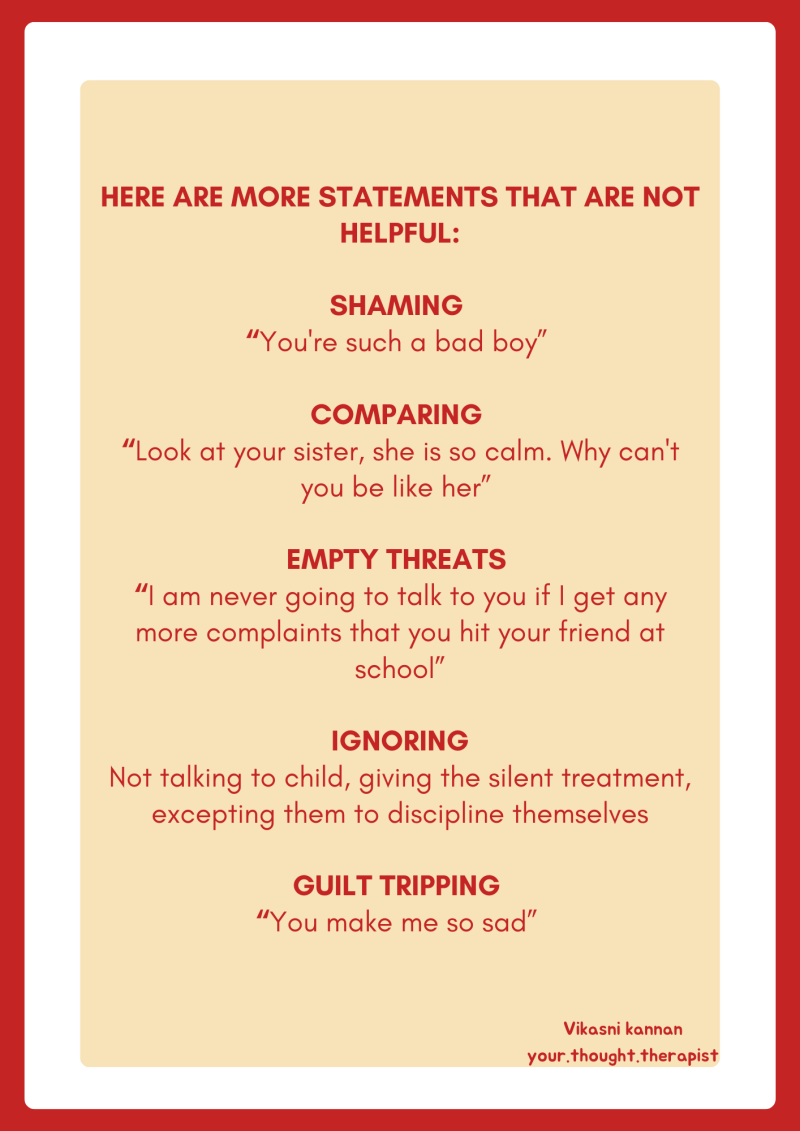
So, the FIRST important step is to KEEP OUR CALM. We have to be the calm in the storm of big emotions of our kids.
- I take long deep breaths, which help me center myself.
- You could try to sip water,
- splash water on your face,
- count to 10,
- or pause before responding.
- I remind myself “My child is not giving me a hard time, he is having a hard time”
It helps when I remind myself of the reasons my son maybe displaying these beaviours. And this perspective shift takes time. So, be kind to yourself.
Always Remember this...
EVERY MISBEHAVIOUR IS A FORM OF COMMUNICATION OF A NEED OR EMOTION
COMMON NEEDS COULD BE, FOR:
- sleep
- connection
- attention
- calmness
- sensory needs
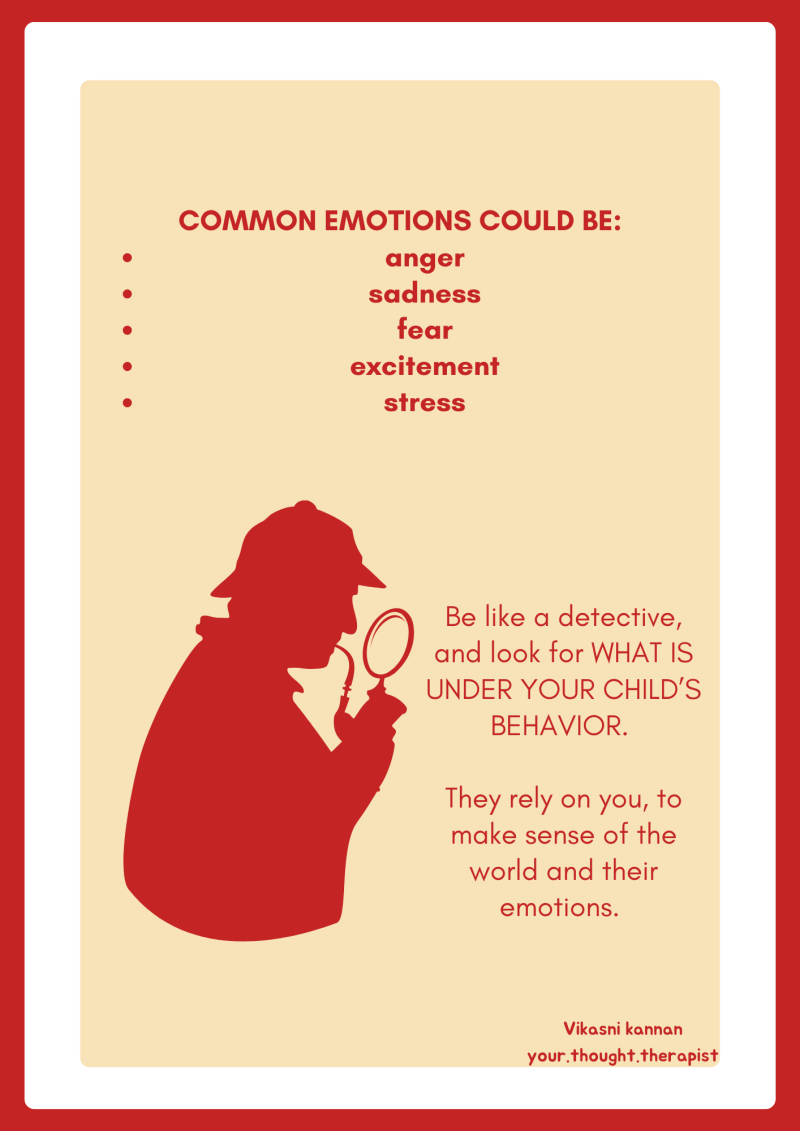
Your curiosity is what will help you understand the situation and your child better. Being curious is all about having an open mind and heart and asking yourself:
- “Oh, what could have happened that my child did this?”
- “umm, I wonder if my child is trying to tell me something through his actions!”
You may wonder, WHAT IF I can't identify the need or the emotion?
That is Okay! It is possible you don't get it immediately. Your calmness is still the go-to strategy. Maintain your composure. If you are emotionally regulated , your child will be able to regulate themselves better and will be more receptive to you.
AFTER YOU ARE CALM, CURIOUS ABOUT THE NEED , YOU MUST:
- Ensure safety of the child - if they are throwing things, you can keep those items away. if they are hitting themselves, or other kids, calmly walk or carry them away. If the child is safe, you can stay in the same place. If the child doesn't like to be carried away, you can gently hold their arms. Do what you feel will be the right thing to manage the situation effectively.
- Establish Connection: sit down, come down to their eye level, and speak softly. Do not tower over them because that will make them feel unsafe . Talk softly in a low tone
- Validate them: Give words to their emotions. “Ohh, your friend took away your toy and that made you angry so you hit them?” Validating is about conveying to your child that "I get you! I know you can not express it properly yet, but I am here with an open heart to understand you" Not essentially in your words, but through your actions. Imagine, how wonderful it will feel for the child to know that my parent is WITH me in this big scary feeling
- Set limit: When the child is calmed down, let them know what is acceptable and where you draw a boundary. Continue talking in a calm , low voice
- EX. “It is ok to be angry, it is not ok to hit” “Let us keep our hands near us ” or "We will use our words ,beta"
- It is normal for kids to test the boundary, and may repeat the behaviour. Don't be disheartened , Continue to be firm and gentle in asserting the boundary
- Teaching moment: Do not stop at telling them what not to do. We must go a step further and tell them WHAT TO DO. These skills are what they ultimately need for successfully expressing themselves in the future. ex.” next time you can say No, I want to play with it first.”
(PS- not all moments will be teaching moments. If child is very upset or angry or crying, wait till they calm down. The learning centre of the brain is not active when we are having big emotions)
- These responses will depend on the child’s age and level of understanding
- With younger kids, they will need more assistance in communicating. You can teach them gestures for NO, or WAIT
- For older kids, you can role-play what and how they can express themselves using words and not hitting
- You can also use books
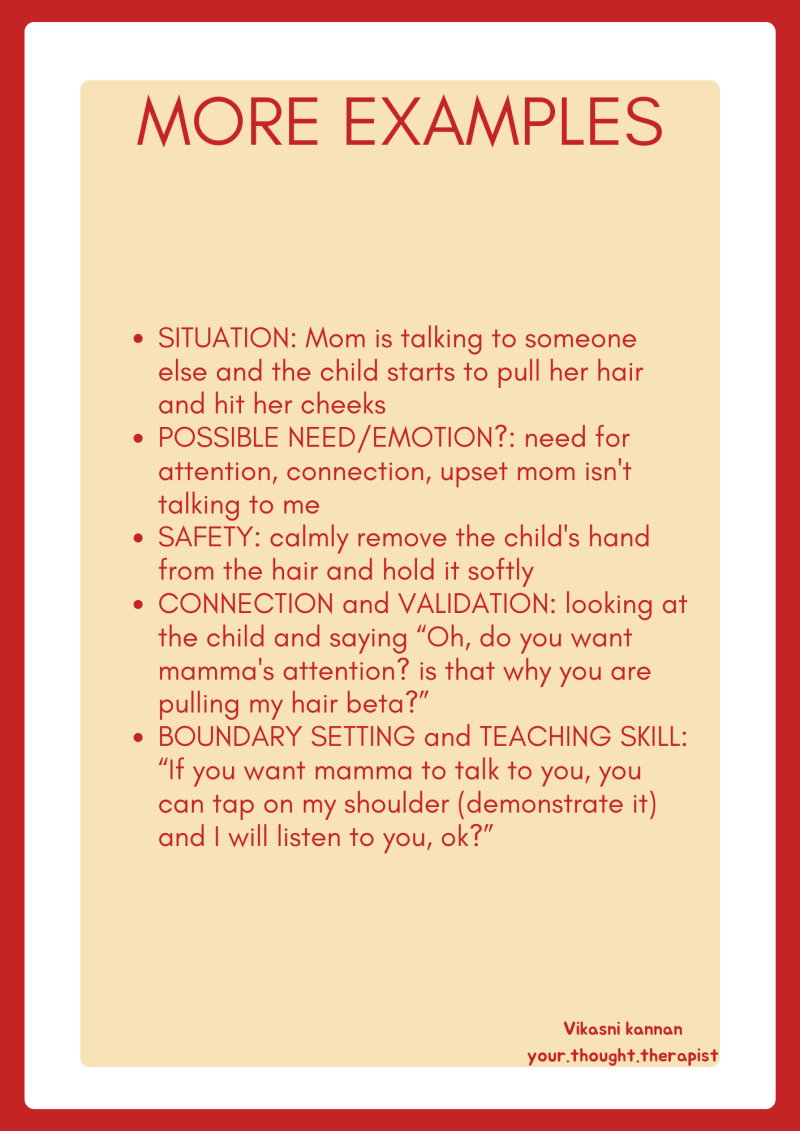
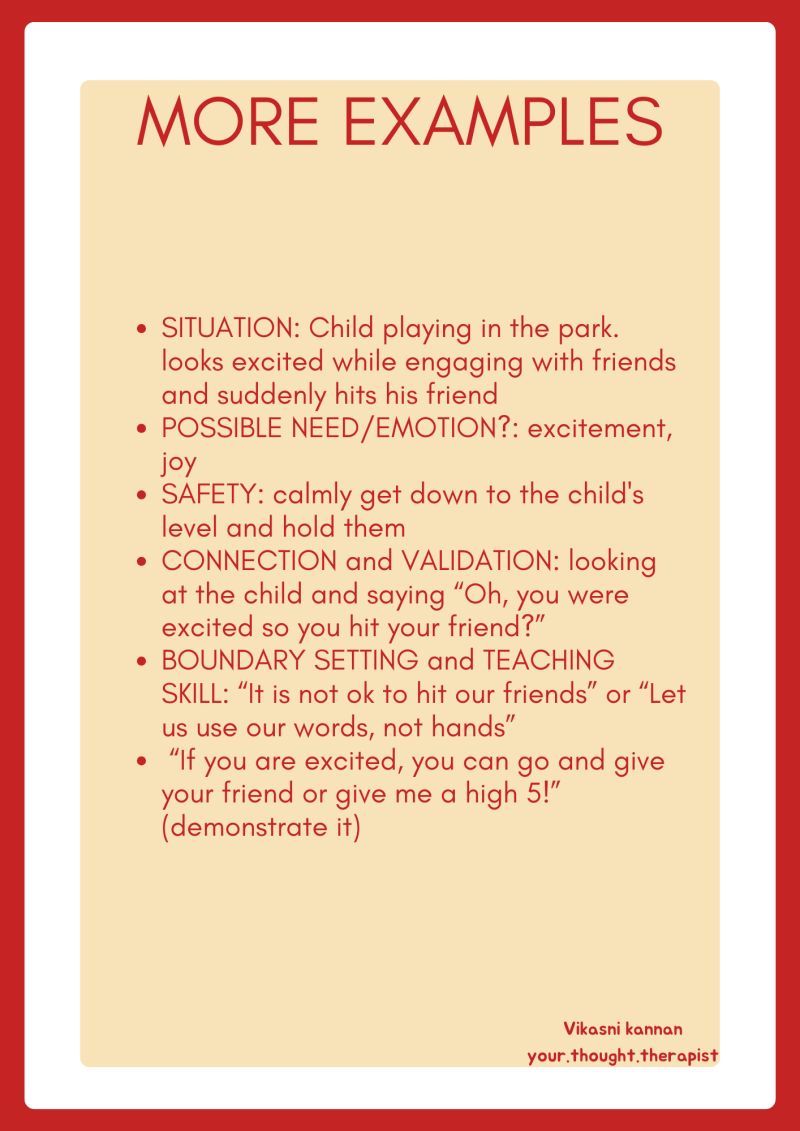
These skills & changes can take time to become a part of your natural parenting response. so keep practicing, learning, and practicing again. You will get there!
I believe in you :)
was this guide helpful?
have any questions?
would love to hear from you :)
Add comment
Comments