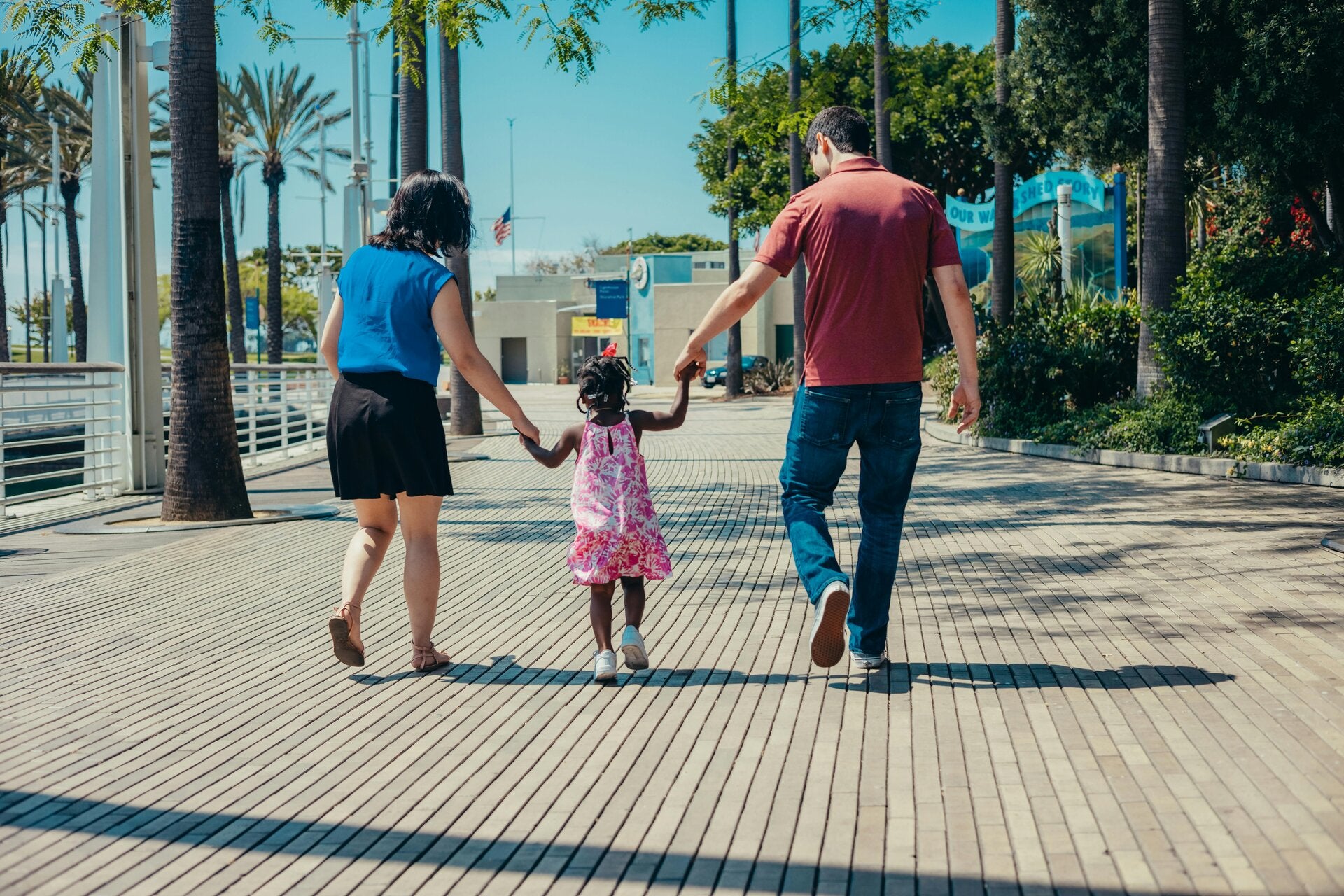
Raising children as a first-generation expat or immigrant often comes with questions about identity — your own identity, your child's identity, and how much of your culture you want to pass on to your children while also allowing them to adapt to the country you now call home.
How do we raise children between two cultures?
How much of our language, traditions, festivals, beliefs and values do we pass on? How much do we adapt to the culture around us? And how do we help our children feel connected to where they come from without making them feel like they don't belong where they are growing up?
These are questions I hear from many expat and immigrant parents I work with.
There is often a dilemma around raising a child in a way that respects your culture — so that they don't forget your language, rituals or festivals — while also making sure they don't feel alien or different in their new country.
Parenting Between Two Cultures
As an immigrant or expat parent, your ideas about parenting may sometimes feel very different from the culture you are now raising your child in.
Language, religious beliefs, political beliefs, educational beliefs and even ideas about independence, discipline and childhood can be different.
You may find yourself asking:
What do I want to keep from the way I was raised?
What do I want to do differently?
And what do I want my child to experience from the culture we now live in?
There isn't always a clear answer.
When Our Ideas About Education Travel With Us
One interesting perspective I often notice among South Asian families and parents is the need to start educational activities early for their child — to prepare them for the outside world, go beyond what is taught at the Kita or kindergarten, and teach them about numbers, words and writing much earlier than their peers.
When I get curious about where that comes from, many parents answer something like:
"I want them to have a one-up from their peers."
Or:
"I don't want them to feel left behind in a new culture when they go to a new school."
Or:
"I want them to be confident because we are already in a new space, and educational success can help them feel confident."
There is often much more behind these choices than academics.
Sometimes, it is about wanting to give our children something that makes them feel secure and confident in an environment that is new to us too.
It can be difficult to separate what we genuinely believe is right for our child from the fears and insecurities that come with being new to a country.
Raising Bilingual Children and Maintaining Your Mother Tongue
Language is another area where many immigrant and expat parents struggle.
How do we teach our child the local language while also helping them learn our mother tongue?
Which language do we speak more?
What happens if they understand our language but don't speak it?
Sometimes, this happens unintentionally because the child is around people or other children who speak one language much more often than the other.
As children start school and spend more time in the language of their new environment, parents may notice that their heritage language becomes less dominant. Research on immigrant families has also highlighted the connection between heritage-language proficiency, family communication and parent-child relationships.
Parents may feel proud of how quickly their child has integrated into the new culture while, at the same time, carrying a little bit of grief about the child losing touch with opportunities for fluent connection with family and people back home.
Both feelings can exist at the same time.
And there isn't necessarily one right way to raise a bilingual or multilingual child. Families may use different approaches depending on their circumstances, including speaking different languages in different environments or having each parent consistently use their own language with the child.
The Grief That Can Come With Parenting Abroad
These experiences can create feelings of confusion, isolation or even anger because it can be difficult to vocalize the struggles of being a first-generation expat or immigrant parent.
We bear the brunt of the heavy cost that comes with navigating unfamiliar systems, adapting to a new language, understanding social expectations and finding our place in a new culture.
And then we are also expected to help our children navigate all of this.
Sometimes, the child seems to integrate much faster than we do.
They learn the language faster.
They make friends faster.
They understand the culture faster.
They may even start correcting us.
And while we can feel incredibly proud of them, there can also be a quiet sense of loss.
A part of us may wonder: Will they still feel connected to where we come from?
Finding a Sense of Identity as an Immigrant Parent
There can be a strong intrinsic attachment to the culture of origin alongside the adoption of aspects of the host culture.
When you're a parent, this adds another layer of complexity.
You are no longer only navigating your own identity.
You are also making choices about what parts of your culture your child will grow up with, what they will understand, what they may question and what they may eventually choose to carry forward themselves.
Children growing up between cultures may also develop their own understanding of belonging and identity. Their experience does not have to look exactly like their parents' experience.
And perhaps that is an important part of the journey.
You Don't Have to Get It Perfect
As a first-generation immigrant or expat parent, a lot of questions can come up.
It can help to sit with these questions, be curious about them and look at them through a lens of openness.
What parts of my upbringing do I want to carry forward?
What parts do I want to leave behind?
What am I adapting because it feels right for my family — and what am I adapting because I am afraid my child will feel different?
What does belonging mean to me?
And what might belonging mean to my child?
Integration takes time.
Understanding what works for your family takes time.
Finding a balance between two cultures takes time.
There is no one perfect way of integrating, adapting or raising a child between cultures.
You can preserve your language and traditions while allowing your child to belong to the culture they are growing up in.
You can adapt without losing yourself.
You can change some of the parenting beliefs you grew up with while still staying connected to your roots.
And most importantly, you don't have to do any of this perfectly.
Sometimes, the goal is not to choose between two worlds.
It is to create a space where your child can belong to both!
Add comment
Comments